

Blog
Zellige Shower Tile vs Ceramic Tile: Which One Actually Lasts

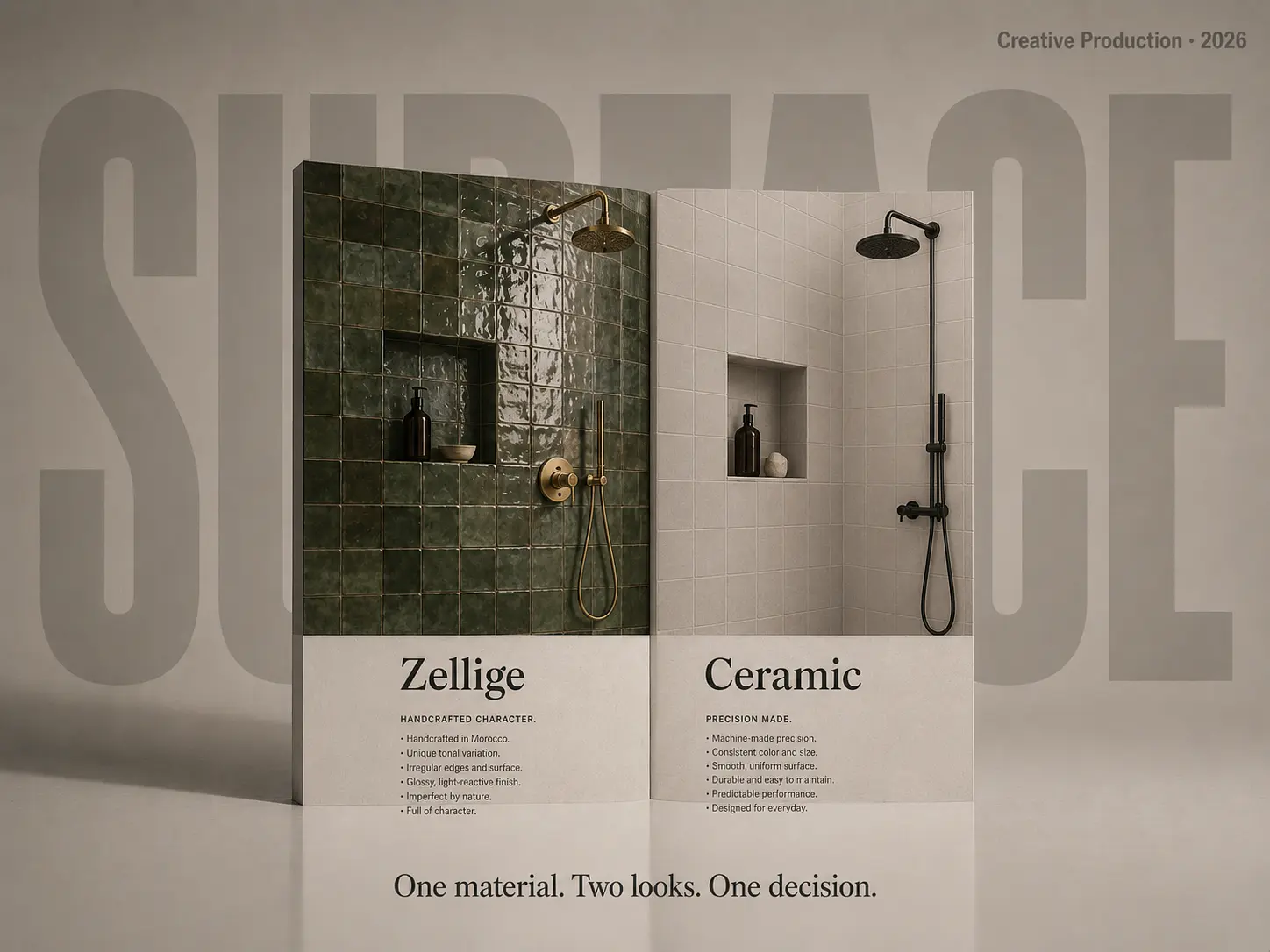
Bathroom renovations have a way of stalling the moment tile comes up. Zellige or ceramic — it sounds like a simple question until you start reading about it, and then suddenly you’re three hours deep into conflicting opinions about grout joints and absorption rates. Let’s cut through that.
What Zellige actually is
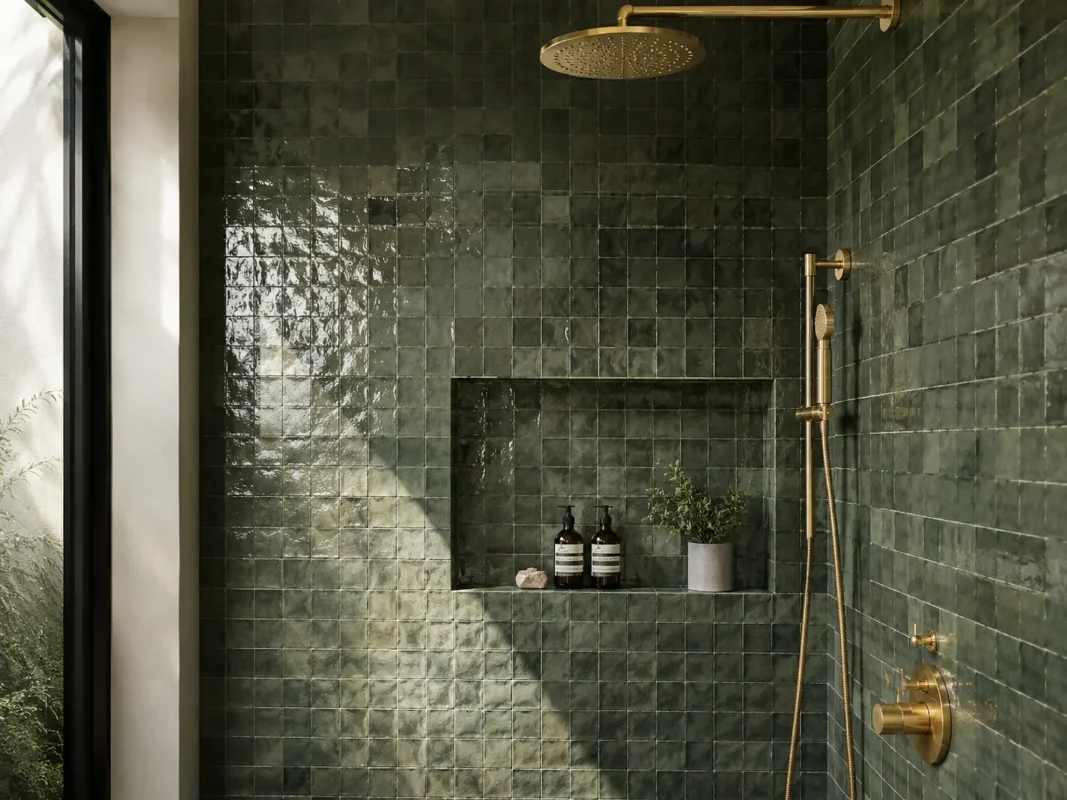
Zellige tiles come out of Morocco, specifically the Fez region, where the production method hasn’t meaningfully changed in centuries. Each tile is hand-shaped from natural clay, individually glazed, and fired in traditional kilns. No two come out identical — slight colour shifts, surface pitting, edges that aren’t perfectly straight. That inconsistency is the whole point.
The glazed surface gives Zellige workable water resistance. The clay body underneath is more porous than industrial ceramic, but the glaze seals it enough for shower use — when installed correctly, that caveat matters more with this tile than most.
Where it genuinely earns its cost is on a wall. The uneven glaze catches light differently across the surface throughout the day. You get depth and movement that flat, mass-produced tile simply can’t replicate. A well-installed Zellige shower tile wall in a primary bathroom looks crafted rather than fitted, which is a distinction most people can feel even if they can’t immediately name it.
The trade-offs are real though. Zellige is thinner and more fragile than standard ceramic — breakage during cutting runs higher, and you can’t approach it with the same wet saw technique. The surface variation that creates the visual appeal also means wider grout joints, more visible grout lines, and a wall that needs more careful sealing in a wet environment. Not difficult maintenance, but more involved.
What ceramic tile gives you
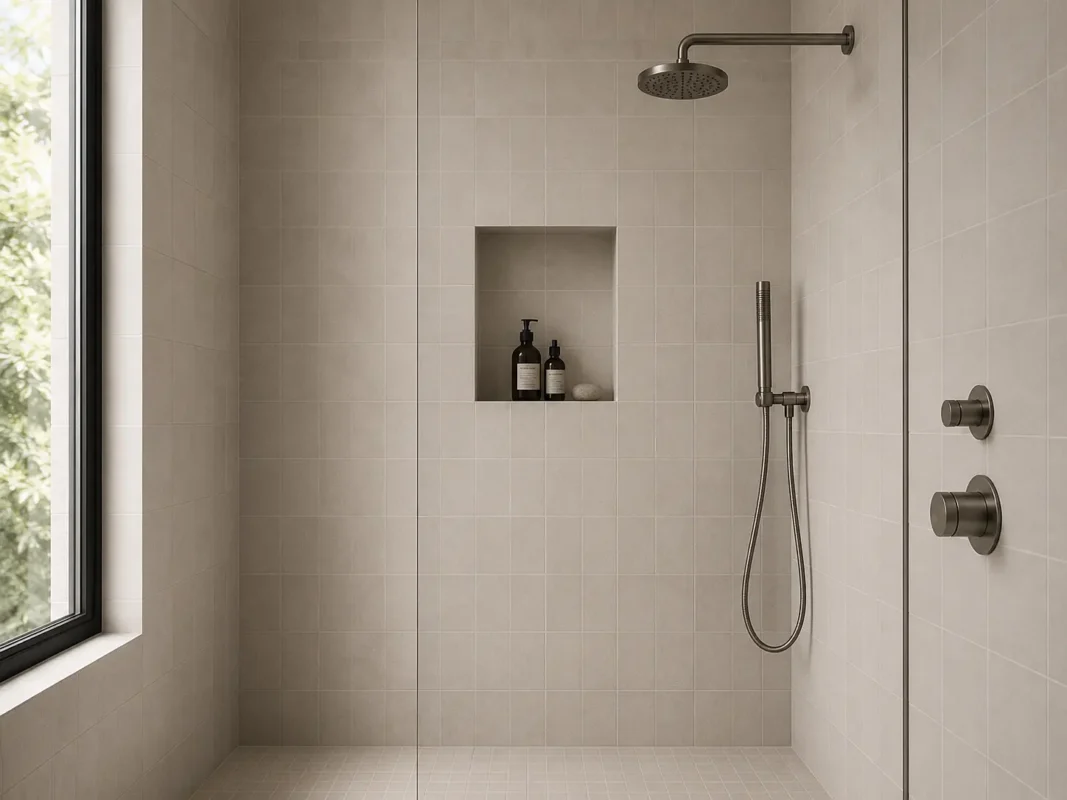
Ceramic has been the default bathroom tile for decades and the reason is straightforward — it works, predictably, at scale, for most people.
Made from clay mixed with other minerals, pressed into uniform shapes and fired at high temperatures, the result is dense and water-resistant. Vitrified ceramic sits below 0.5% water absorption, which is the technical threshold for tiles considered properly waterproof for wet areas. The PEI rating system gives you actual measured data on hardness — Class 3 minimum for shower walls, Class 4 or 5 for floors.
UK pricing typically runs from around £20 per square metre at the budget end up to £80 for premium ranges. Zellige starts above that and climbs quickly depending on origin and supplier. Installation is faster too — standard sizes, standard adhesives, predictable cutting. Most competent tilers can fit a ceramic shower in a day or two. Replacing a damaged tile years down the line is usually straightforward because the products are mass-produced and matching isn’t difficult.
Cleaning is uncomplicated. Ceramic handles standard bathroom cleaners, limescale removers and routine scrubbing without issue.
Where each one makes sense
Water resistance — ceramic has the better raw spec. Lower absorption, denser body, more standardised performance. Zellige is fine in showers but the installation margin for error is narrower.
Durability under daily use — ceramic again. The PEI system gives measurable confidence. Zellige doesn’t have an equivalent industrial classification because it isn’t made to industrial specifications.
Appearance — Zellige, by some distance. Nothing in the ceramic range replicates the light movement across a handmade glazed surface.
Cost and installation — ceramic on both counts. Significantly cheaper per square metre, faster to fit, and forgiving enough that most tilers can handle it. Zellige needs someone who’s worked with handmade tile before, which adds to labour cost and narrows your options.
Which to actually pick
Heavy daily use, children, shared family bathroom, budget as the main constraint — ceramic. It handles what gets thrown at it and asks almost nothing in return.
Primary bathroom, appearance driving the decision, tiler who knows handmade tile, budget that can absorb the premium — Zellige. The wall will look genuinely different from anything ceramic produces.
Some bathrooms split the difference. Zellige on one feature wall, ceramic everywhere else. In higher-end renovations, this is becoming a fairly common approach — you get the visual payoff in the place it matters most without paying Zellige rates per square metre throughout.
Whichever direction you go, installation quality matters more than the tile choice itself. A badly fitted Zellige wall fails faster than a well-fitted ceramic one. Get a tiler who knows the material, allow proper time and budget, and either option gives you a shower that holds up.