

Blog
Cyber Essentials Changed In April And One Cloud Login Without MFA Now Fails The Whole Assessment

New Cyber Essentials applications have been marked on a new question set called Danzell since 27 April 2026, and a single cloud account without multi-factor authentication now fails the whole assessment. The scheme is owned by the National Cyber Security Centre and run by IASME, so the rules are IASME’s whichever certification body you use. The five controls have not changed. What changed is how three of the answers are marked.
A Single Cloud Account Without MFA Is Now A Fail
MFA has been part of Cyber Essentials since the cloud rules came in during January 2022. The April update did not add it. It changed the marking, so a missing MFA setting is no longer a point lost but a fail.
If a cloud service offers MFA and you have not switched it on, the assessment fails. That applies when the service is free and when MFA is a paid extra.
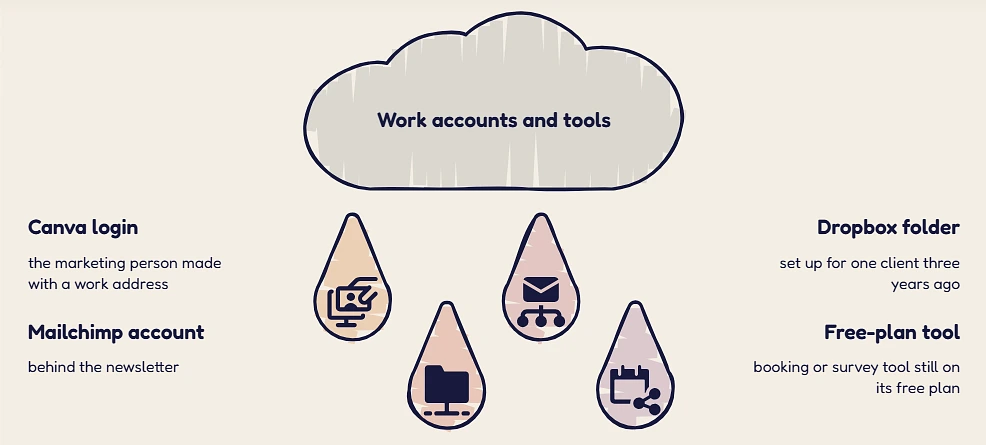
The rule covers all users, not only administrators. Email and the accounting package are usually set up properly because someone looks after them. The accounts that fail firms are the ones nobody listed:
- a Canva login the marketing person made with a work address
- a Dropbox folder set up for one client three years ago
- the Mailchimp account behind the newsletter
- a booking or survey tool still on its free plan
Passkeys count as MFA. The NCSC said on 23 April that it now recommends them over passwords.
You Cannot Leave The Cloud Out Of Scope Any More
Older guides told firms they could certify one part of the business at a time. Version 3.3 of the requirements says cloud services cannot be left out. Any part of the network that is left out has to be explained to the assessor, with a note on how it is separated from the rest. Staff phones and laptops are in scope once they are used for work email. A phone used only for calls, texts or an MFA app is not.
Scope is agreed before the assessment, so it is the first thing to get right. A firm that wants help with it can use a company that offers support with Cyber Essentials certification. The assessment itself is marked by an IASME-licensed certification body. Certifying one separately managed part of an organisation is still allowed. The free insurance is only given for whole-organisation certification, so check what your customer or contract asks for first.
The Five Controls Underneath Are Still The Five You Knew
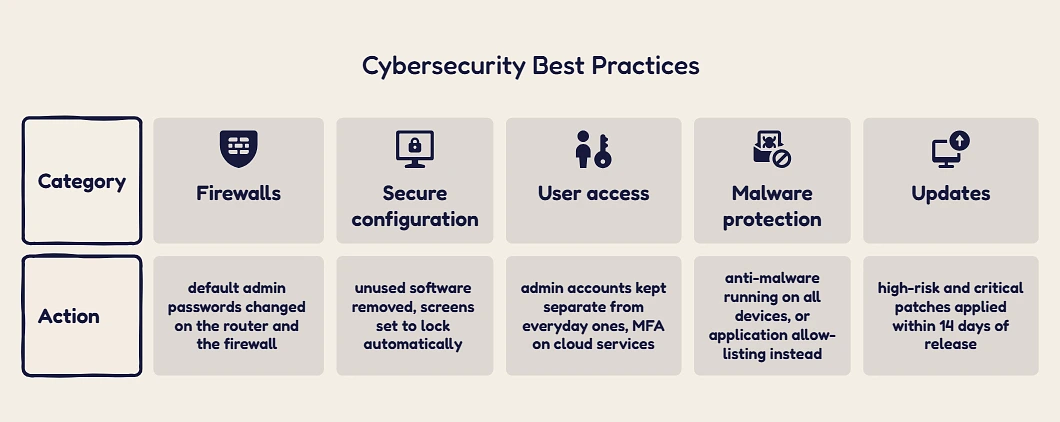
The scheme still has five technical controls. Checking your own systems against them before you register shows where the gaps are.
- Firewalls: default admin passwords changed on the router and the firewall
- Secure configuration: unused software removed, screens set to lock automatically
- User access: admin accounts kept separate from everyday ones, MFA on cloud services
- Malware protection: anti-malware running on all devices, or application allow-listing instead
- Updates: high-risk and critical patches applied within 14 days of release
Software that the maker no longer supports cannot stay in scope. It has to be removed, put back under support or moved to a separate subset with no internet traffic.
Password rules depend on what else is in place:
- With MFA: at least 8 characters
- Without MFA: at least 12 characters, or at least 8 with an automatic block on common passwords
- PINs and passwords that unlock a device have their own rules
Patching also became a pass-or-fail question in April. Two questions now fail the assessment automatically if critical or high-risk updates were not applied within 14 days. One covers operating systems and router and firewall firmware. The other covers applications and their extensions. The 14-day limit is old. The automatic fail is new.
What You Pay And What Comes Back With A Pass
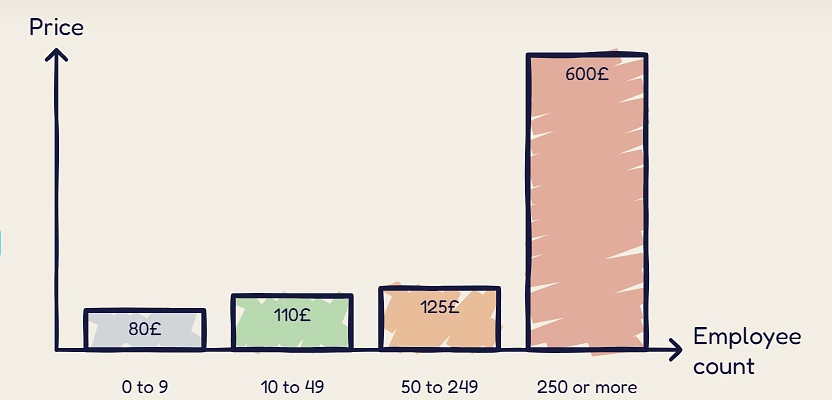
The fee is set by the number of employees. On 3 November the government announced the Cyber Essentials First Step Fund, which takes 75 per cent off the fee for eligible UK small and medium firms that have not held the certificate in the last four years.
- 0 to 9 employees: £320, or £80 with the discount
- 10 to 49 employees: £440, or £110
- 50 to 249 employees: £500, or £125
- 250 or more employees: £600, no discount
Prices exclude VAT. The fund runs until 31 March 2027 or until the money runs out.
After you register with a certification body, you answer the questionnaire in an online portal. A board member or an equivalent authorised person signs the declaration. From this year the declaration also says the firm will stay compliant for the whole period of the certificate. Most assessors return a result within three days. A failed answer can normally be corrected and resubmitted within two working days at no extra charge.
A pass comes with the certificate, a badge and £25,000 of cyber liability insurance for firms that qualify. To qualify, the whole organisation must be certified, it must be based in the UK or the Crown Dependencies, its turnover must be under £20 million and it has to opt in.
Firms That Started Before April Were Given Six Months
A firm that opened its assessment account before 27 April had six months to finish on the old question set. That period ended on 26 October. New applications and annual renewals are now marked on Danzell. Cyber Essentials Plus changed too. If a second patching sample fails, the audit fails and the basic certificate is revoked.
Large Customers Are Being Asked To Check Their Suppliers
The government announced its Cyber Resilience Pledge at the CYBERUK conference in Glasgow on 22 April and launched it formally at Downing Street on 7 July. Large organisations that sign agree to register with the Cyber Essentials Supplier Check Tool within two months. They also agree to check how many of their suppliers hold the certificate and to report the findings to their board. Signing is voluntary. Research done for the government puts the average cost of a successful cyber attack at almost £195,000 across UK businesses of all sizes.
The first job is a list of the services anyone in the firm logs into with a work email. Which account in your business would be the one nobody remembered?