

Blog
When Body Art No Longer Fits Your Life Story

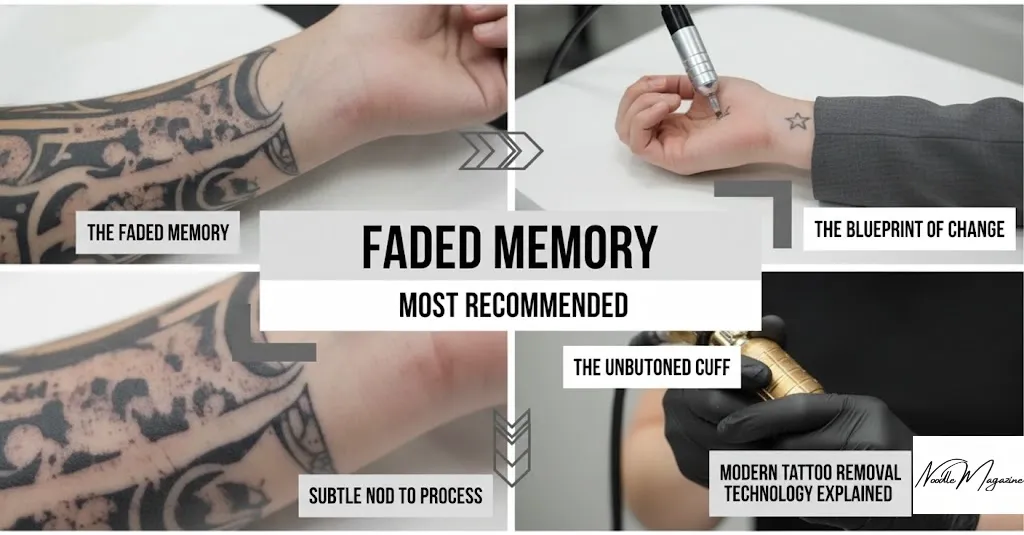
Tattoos once represented permanent commitments, but life changes often leave people with ink that no longer matches their story. Many people with tattoos think about removal, and relationship-based tattoos or professional considerations are common reasons for this decision. A name from a past relationship, a design that hasn’t aged well, or simply a change in personal taste can all lead many to seek removal options.
The Psychological Journey of Tattoo Regret
Tattoo regret often starts as a small, nagging feeling that doesn’t go away. A tattoo that once seemed important can start to feel out of place as life moves on. When this happens, people might feel uncomfortable because the tattoo no longer matches who they are now.
Names of former partners and designs reflecting past phases are frequently mentioned as sources of regret. Professional considerations also play a large role, as individuals worry about how their tattoos are perceived in work environments. Changes in personal style account for additional cases, as what once looked meaningful in early adulthood may feel out of place years later.
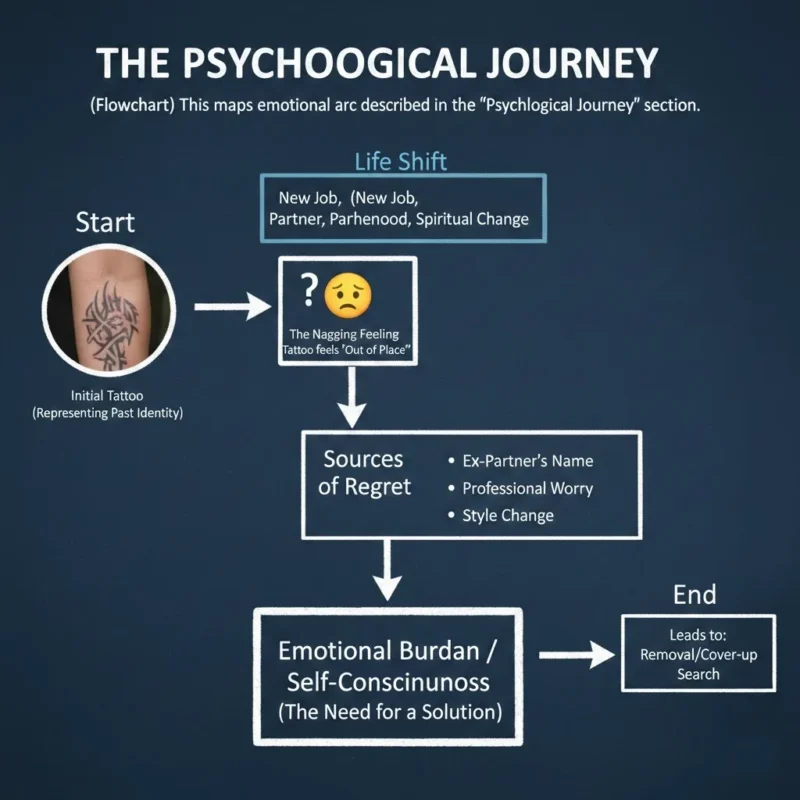
Major life changes frequently prompt people to reconsider their body art. New jobs, relationships, parenthood, or spiritual changes can shift how people view their tattoos. What once represented freedom might feel limiting in a new chapter.
Many report feeling self-conscious in situations where their tattoo is visible, from job interviews to beach holidays. This emotional burden explains why many choose removal, despite the time and cost involved. Accessing services such as professional laser tattoo removal treatments becomes an option for those looking to address both physical and emotional aspects of tattoo regret. The relief of no longer carrying visible reminders of past mistakes often outweighs the temporary discomfort of the removal process.
Modern Tattoo Removal Technology Explained
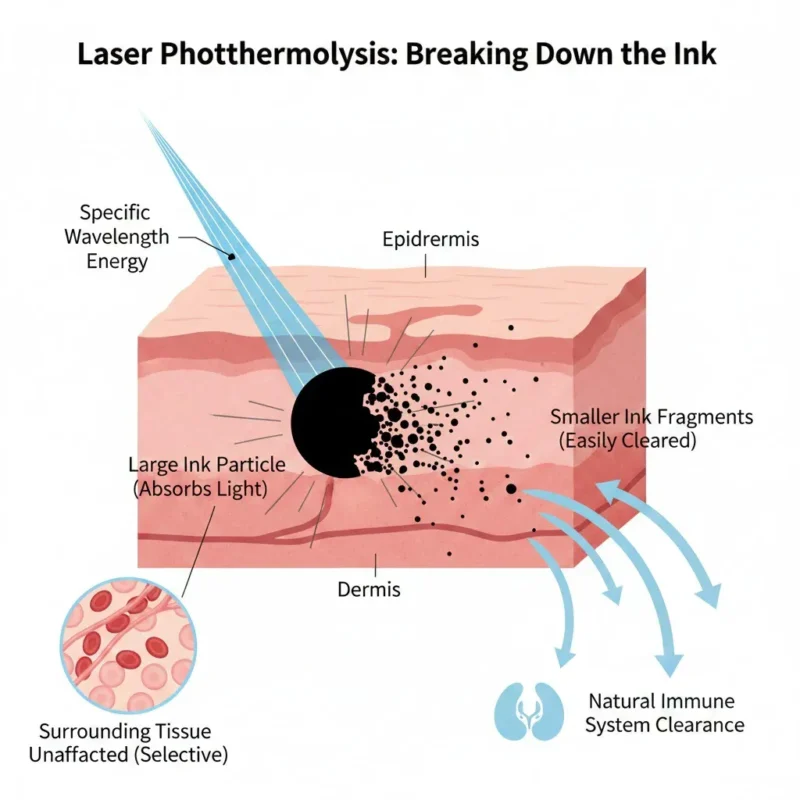
Laser tattoo removal works through selective photothermolysis. This involves using light wavelengths that ink particles absorb more readily than skin pigment. The laser energy heats and breaks the ink into smaller fragments while leaving surrounding skin largely unaffected. Skin cells reflect or transmit the light rather than absorbing it, which reduces the risk of burns or scarring.
This approach allows the body to clear the disrupted ink through its natural immune processes. The result is noticeable fading with minimal impact on other tissues.
Different ink colours absorb different light wavelengths, which is why modern clinics use multiple laser types. Black and dark blue inks respond well to standard Q-switched lasers. Stubborn greens and yellows require specialised wavelengths. The latest picosecond lasers deliver energy in ultra-short pulses measured in trillionths of a second, making them more effective than older technologies.
Clinics in London have adopted these advanced systems, with many offering combinations of PicoSure, PicoWay, and RevLite lasers. This method addresses the full spectrum of tattoo colours. The multi-laser technique has greatly improved results for patients with colourful or previously resistant tattoos.
Skin type also affects treatment method. The Fitzpatrick scale classifies skin from Type I (very fair) to Type VI (very dark). This helps determine safe laser settings. Darker skin requires more careful treatment to avoid pigmentation changes. Modern lasers have made removal safer for all skin types when handled by qualified practitioners.
Preparing for the Removal Process
Setting realistic expectations is very important before starting tattoo removal. Complete elimination typically requires several sessions, depending on the tattoo’s age, colours, depth, and location. Sessions are usually spaced several weeks apart. This allows the body time to clear broken-down ink particles and the skin to heal properly.
Before treatment begins, a detailed consultation evaluates the tattoo along with the patient’s overall skin condition. UK clinics reference any history of sun exposure, current medications, and existing skin conditions during this process. These details affect laser safety and effectiveness. A patch test is routine in reputable London clinics, where a practitioner uses the selected laser on a small area of the tattoo.
This step reduces risk by helping identify skin sensitivities early. It allows for adjustments in treatment settings to minimise complications such as blistering or pigment changes. For best results, follow the clinic’s instructions regarding sun avoidance and skincare both before and after the patch test.
Financial planning is another consideration. Many London clinics publish typical price ranges for laser tattoo removal sessions. Prices usually start at a certain amount and rise depending on tattoo size and chosen technology. A person with a medium-sized design might expect to pay a session rate towards the higher end of this scale.
During consultations, ask detailed questions about the specific lasers used, practitioner qualifications, and expected outcomes. Request before-and-after photos of similar tattoos they’ve treated. Medical history disclosure is essential for safety reasons.
Life After Tattoo Removal
Most people achieve noticeable fading rather than complete disappearance of their tattoos. Results vary based on ink colours, skin type, and the tattoo’s age. Black and dark blue inks typically respond best, while yellows and light greens may remain partially visible even after multiple sessions.
Proper aftercare greatly improves results. Following treatment, the area needs gentle care similar to a mild sunburn. This includes keeping the area clean and applying recommended ointments. Shielding treated skin from the sun is essential because sun exposure can trigger inflammation and increase the risk of pigmentation changes.
Hydration assists by ensuring the body’s lymphatic system works efficiently. This allows immune cells to flush out ink particles more effectively. Neglecting aftercare steps can lead to complications and poorer outcomes.
Many who complete tattoo removal report positive effects on confidence beyond the physical changes. Freedom from unwanted ink often translates to greater comfort in professional and social settings.
Alternatives to Complete Removal
Cover-up tattoos offer a creative option instead of removal. They transform unwanted designs into new artwork. Skilled tattoo artists can incorporate existing lines and shading into fresh designs that completely change the visual impact. Dark, bold new elements work best to disguise old tattoos. Some limitations exist based on the original ink’s density and colour.
Partial fading through a few laser sessions can substantially improve cover-up results. By lightening the original tattoo, artists gain more flexibility in creating new designs. This combined approach often brings better results than using just one method. This is especially true for large or dark tattoos that would be difficult to completely remove.
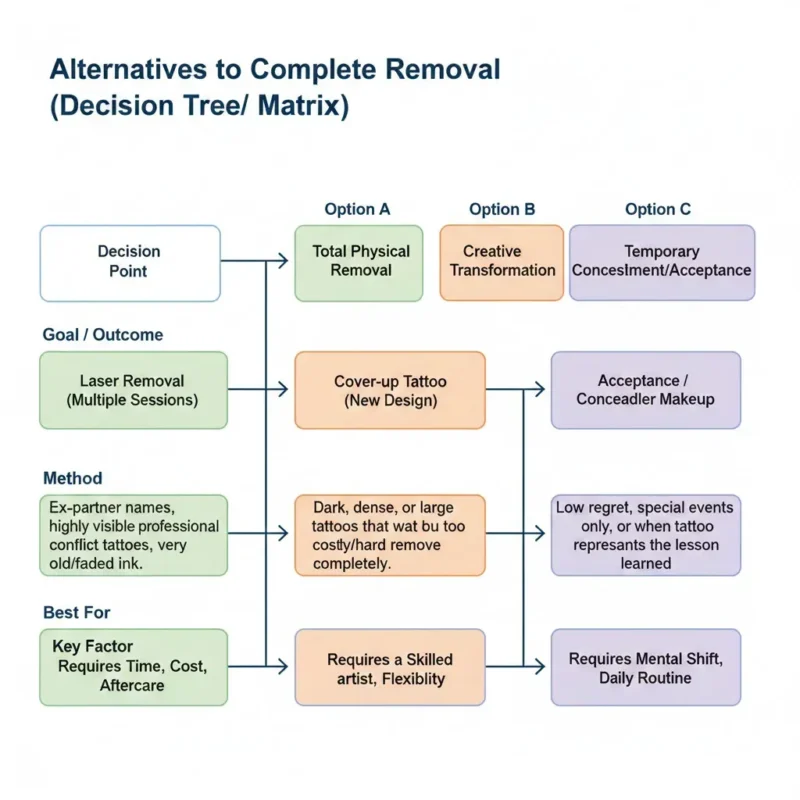
For those needing temporary solutions, several makeup brands offer high-coverage, water-resistant concealers. These are specifically formulated for tattoo coverage. These products provide short-term concealment for special events, job interviews, or family gatherings.
Some people ultimately choose acceptance over alteration. Reframing the meaning of unwanted tattoos can shift them from regrets into reminders of personal growth. What once represented a mistake might become a symbol of lessons learned or chapters closed. This mental shift doesn’t work for everyone. For some, it offers peace without the physical process of removal.