
Blog
When Vogue, Wired And Elle Were All Caught Publishing AI Content They Had Not Realised Was AI

Vogue is supposed to have checked. That has always been the contract, whether anyone has ever written it down or not. You paid for the magazine. This is someone from Condé Nast, someone with taste that would embarrass most of us, who looks at the photograph and says, this is worth printing. The model is real. The writer exists. The facts have been through a desk where a person whose entire job is checking has checked them.
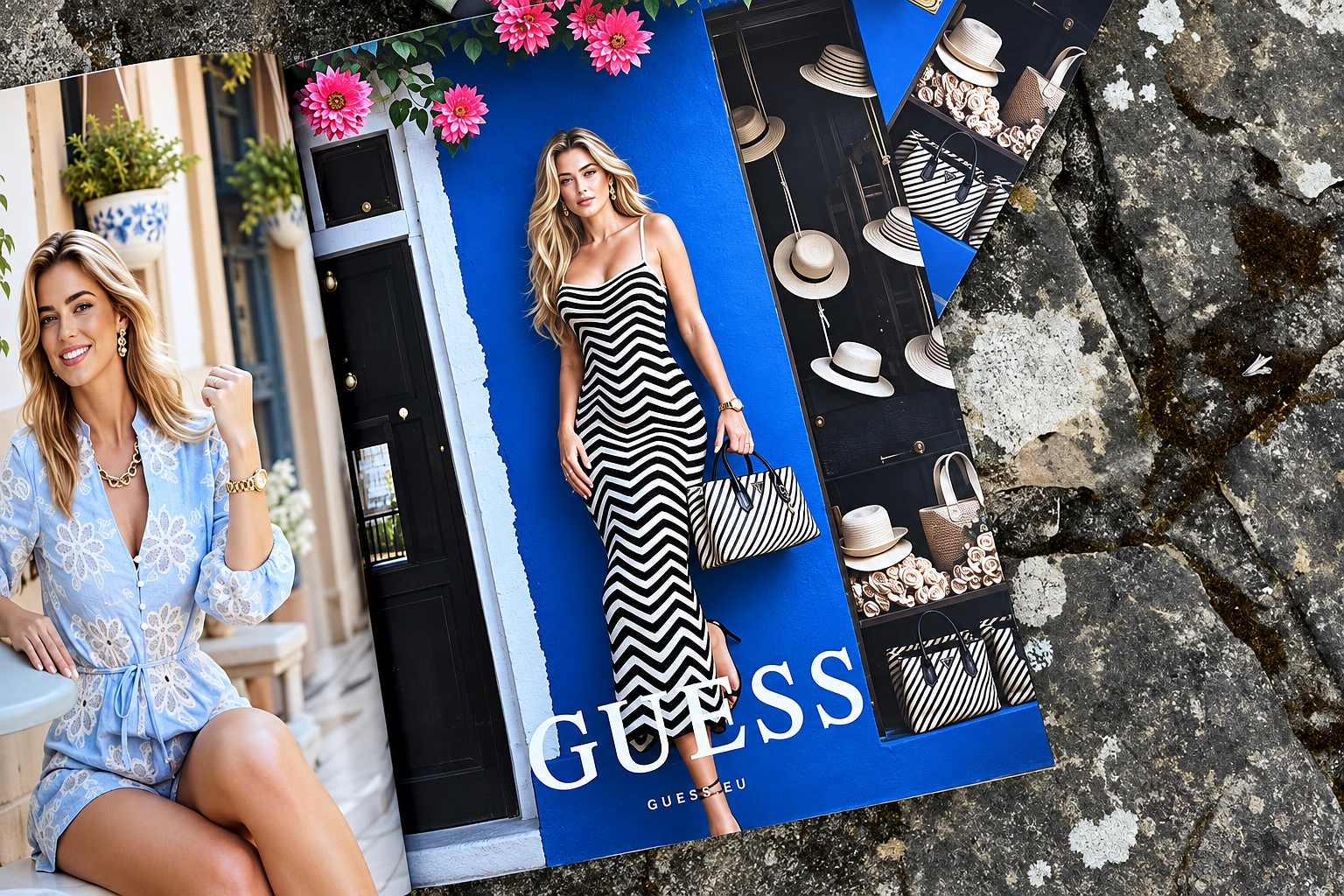
So, when a two-page Guess advertisement featuring two models created by a London-based AI company, Seraphinne Vallora, appeared in the August 2025 issue of American Vogue with nothing but the small print at the bottom reading “Produced by Seraphinne Vallora on AI,” outrage should not have been a shock to anyone at Condé Nast. But apparently it was.
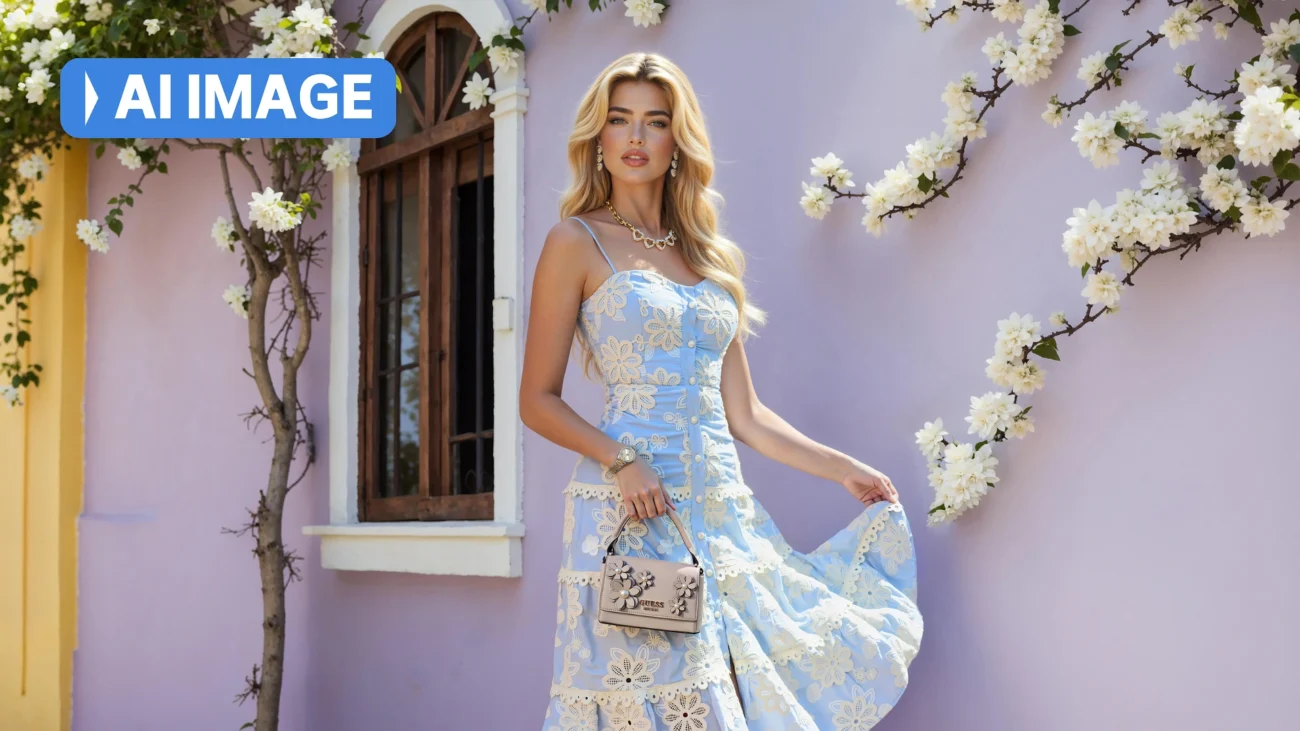
Both models had names, the blonde one Vivienne and the brunette Anastasia, and both were looking directly into the lens with all the editorial confidence that comes from years of working the catwalks. Of course they’d never done that, because neither of them had ever stood in front of a camera or walked down a corridor or eaten breakfast or existed.
And then TikTok went first, as it always does. And then one of the creators said what most people were already thinking: all of these models are going to be out of work, all of these photographers are going to be out of work. This drove subscribers to cancel their subscriptions, and Forbes published an article entitled “Vogue’s AI-Generated Models Spark Reader Fury And Industry Panic.” ABC News and Good Morning America reported the story on air that week. Anne Hathaway was on the cover of the issue, and it’s the sort of detail that makes the whole thing feel slightly absurd, since one of the most photographed real women in the world was sharing the pages of this magazine with two women who had never been photographed at all because they did not exist.
Seraphinne Vallora put out AI-generated images to Elle, Grazia, Harper’s Bazaar, the Financial Times and the Wall Street Journal before the Vogue issue, which suggests this wasn’t a rogue ad operating in isolation. It had been going around the industry for months, but Vogue was the publication where enough people noticed at the same time for the thing to become a story.
What Happened At Wired Was Worse, And It Took A Payment Glitch To Catch It
Where the Vogue incident was about images, the Wired one was about words, and it is harder to expose, because there is nothing unusual about the appearance of a generated sentence. It takes some extra work to make sure the people quoted in it really exist.
In early 2025, a freelance journalist calling herself Margaux Blanchard was pitching stories to major publications. Wired commissioned Blanchard to write about couples getting married in online video game worlds like Minecraft, and published the story. Business Insider published two articles, while Index on Censorship, a free speech advocacy non-profit, published a magazine article. SFGate, the California-based news site owned by American publisher Hearst, reported on Disneyland influencers.
Charlotte Tobitt of Press Gazette, who was tipped off and investigated, found that Margaux Blanchard did not exist as a person, and the couples in the Wired story could not be found online. One of the articles had described a town in Colorado called Gravemont, a decommissioned mining town that had supposedly been redeveloped into some sort of community space.
Gravemont is not a real town, but rather a fabricated place, as were the couples. The quotes had been fabricated. In other words, the entire corpus of that multi-platform journalistic work was created by AI, and no one at any of those publications had actually checked whether the journalist was real or whether the sources existed.
Wired retracted the article, saying it “did not go through a proper fact-check process or get a top edit from a more senior editor.” Business Insider later deleted two articles, and SFGate took down theirs, saying it was “pending an internal investigation.” Index on Censorship said the piece “appears to have been written by AI.”
And here’s the part that should bother anyone who still assumes editorial process would catch this sort of thing. Wired has since confirmed that the request for an unusual method of payment was what gave the game away. Not the editorial process. Not the fact checking. Not a senior editor reading the piece and thinking hmm, Gravemont does not sound like a real place. A payment anomaly caught a completely manufactured journalist who invented entire towns and quoted people who do not exist, and had managed to get published in one of the most respected technology magazines in the world.
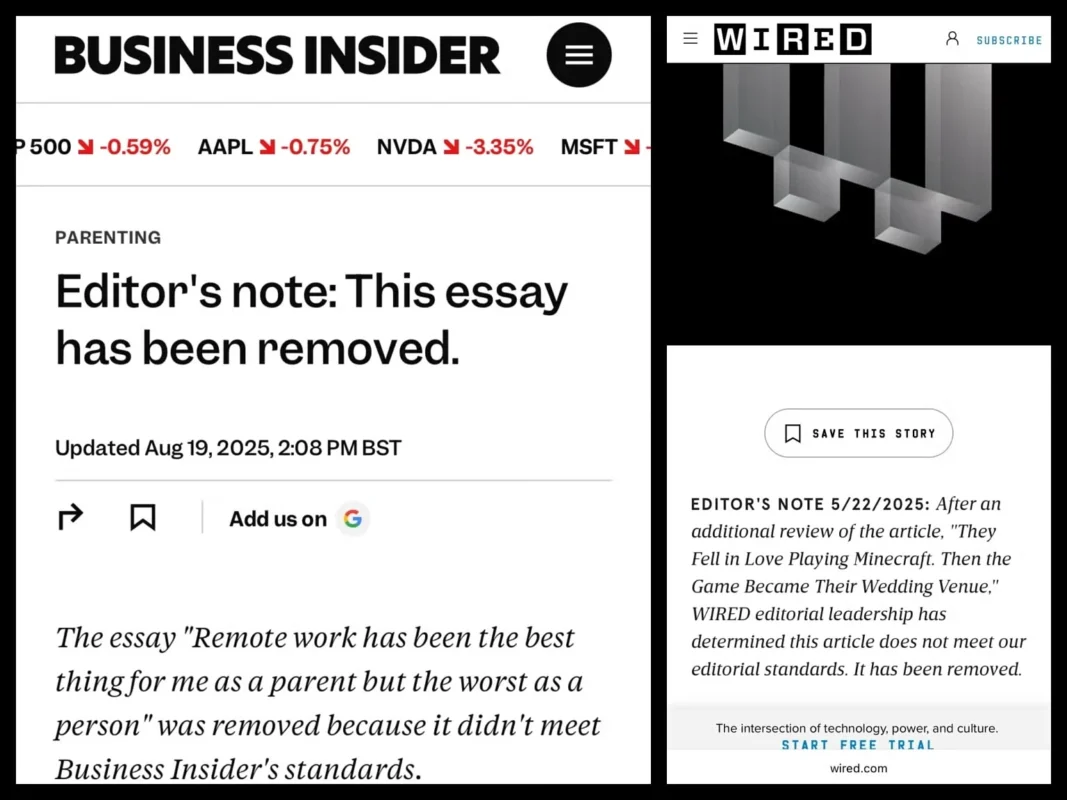
The Blanchard scandal led Business Insider to search through its catalog and delete 38 first-person essays over concerns about their authors’ identities.
Elle Belgium Had Been Running Fake Journalist Profiles For Months Before Anyone Noticed
In June 2025, the Belgian public service broadcaster VRT News reported that Ventures Media, the company behind Elle, Marie Claire and Forbes in Belgium, had been publishing articles under the names of journalists who did not exist, using AI-generated images as if they were photos of those journalists. The bylines were fakes.
One was called Claire De Wilde, who had written nearly half of everything Marie Claire Belgique published during the period VRT reviewed. Nearly half the magazine’s content had relied on a non-existent name and a generated face, presented to readers as if a working journalist with a byline had written it.
After the exposure, Ventures Media began crediting the outlets instead, added disclaimers that the content was AI-generated and reviewed by editors, and carried on publishing.
Whether “we are still doing it but now with a label” was the answer readers wanted is perhaps a question that answers itself.
More Than 100 Articles Across British Newspapers Had Been Citing Fake Experts
This one did not get the attention that the Vogue or Wired stories did, and for the scale of it, perhaps it should have.
Press Gazette compiled a dossier of more than 100 articles across Mail Online, The Sun, the Mirror, the Express, HuffPost UK, Yahoo News, Metro, The Independent and The Telegraph, where the experts were partly or completely fake. Companies selling CBD oil, sex toys and vapes had allegedly used AI tools to create expert personas, then gamed journalist request platforms such as ResponseSource to get those fictional experts quoted in national newspapers.
The clean-up, once each outlet realised what had happened, went roughly like this:
- The Sun said it would find and remove any article featuring one seemingly fake expert, who had commented on everything from what the colour of your underwear says about your personality to the specific details of named sex positions.
- Reach, publisher of the Mirror and Express titles, said it was finding and removing articles across its newsbrands.
- The Telegraph warned its freelancers to avoid using journalist request databases without reviewing the sources.
- Yahoo News deleted or amended more than a dozen articles.
A survey Press Gazette ran alongside the report found that while 95.3% of publishers agreed AI-generated content should be disclosed to the reader, 63.5% found no feasible way to detect whether AI content had been injected.
That gap, between knowing the content should be checked and having no practical means to check it, is probably the most important number in this entire article.
What All Of This Would Mean For A Reader Who Had Not Been Paying Attention
It wasn’t just little magazines making minor mistakes. Vogue, Wired, Elle, Marie Claire, the Mail, the Sun, the Mirror, the Express, HuffPost, Yahoo News, Metro, The Independent, The Telegraph. Between them, that list covered most of the editorial brands an English speaking reader might have trusted without thinking twice about it.
Every single one had been caught publishing AI text or images without disclosure or vetting, from Vogue (whose AI-generated photos at least had a footnote most readers wouldn’t notice) to Wired (a fake journalist inventing fictional towns) to Elle Belgium (running fictional profiles for months). National newspapers quoted fake experts, created to sell products.
If even the fact checking department of Wired, possibly the most thorough fact-checking operation in magazine publishing, can’t catch a writer who made up a fictional town in Colorado, then what exactly is getting into print without a second set of eyes taking a look?
That is not a paranoid question. It is a practical one.
Press Gazette also launched its own AI checker for editors in September, called Made by Humans, a product by Dublin-based software company Flip Pay that was built out of the same investigative work Tobitt and her team had done. For readers and smaller publishers who don’t want to wait for the next scandal to find out whether something they are reading was written by a person, an AI checker can now scan text for the patterns and structural markers that tend to distinguish human written prose from machine generated content. No tool is perfect and none is catching everything, but the fact that there are tools at all is a response to the 63.5% of publishers who had said they couldn’t do this themselves.
The Vogue One Keeps Coming Back
Not because it was the worst scandal on this list. In fact, the Wired fabrication was worse. But the fake experts story travelled much further, and the Elle Belgium one was worse because it had been running so long before anyone noticed.
But Vogue is the one that might have changed the way we look at magazines in general, because if the magazine that had spent a hundred years building its visual authority on the work of Irving Penn, Lee Miller, Richard Avedon and Helmut Newton could run AI-generated images with a footnote, then the assumption that “this is in Vogue so someone must have checked it” would no longer be safe. And that assumption had been, for most of the magazine’s history, the entire reason for buying it.
Once it’s broken, it doesn’t come back easily.