

Blog
Why Calgary Costs a UK Mover Less Than the House Prices Make It Look

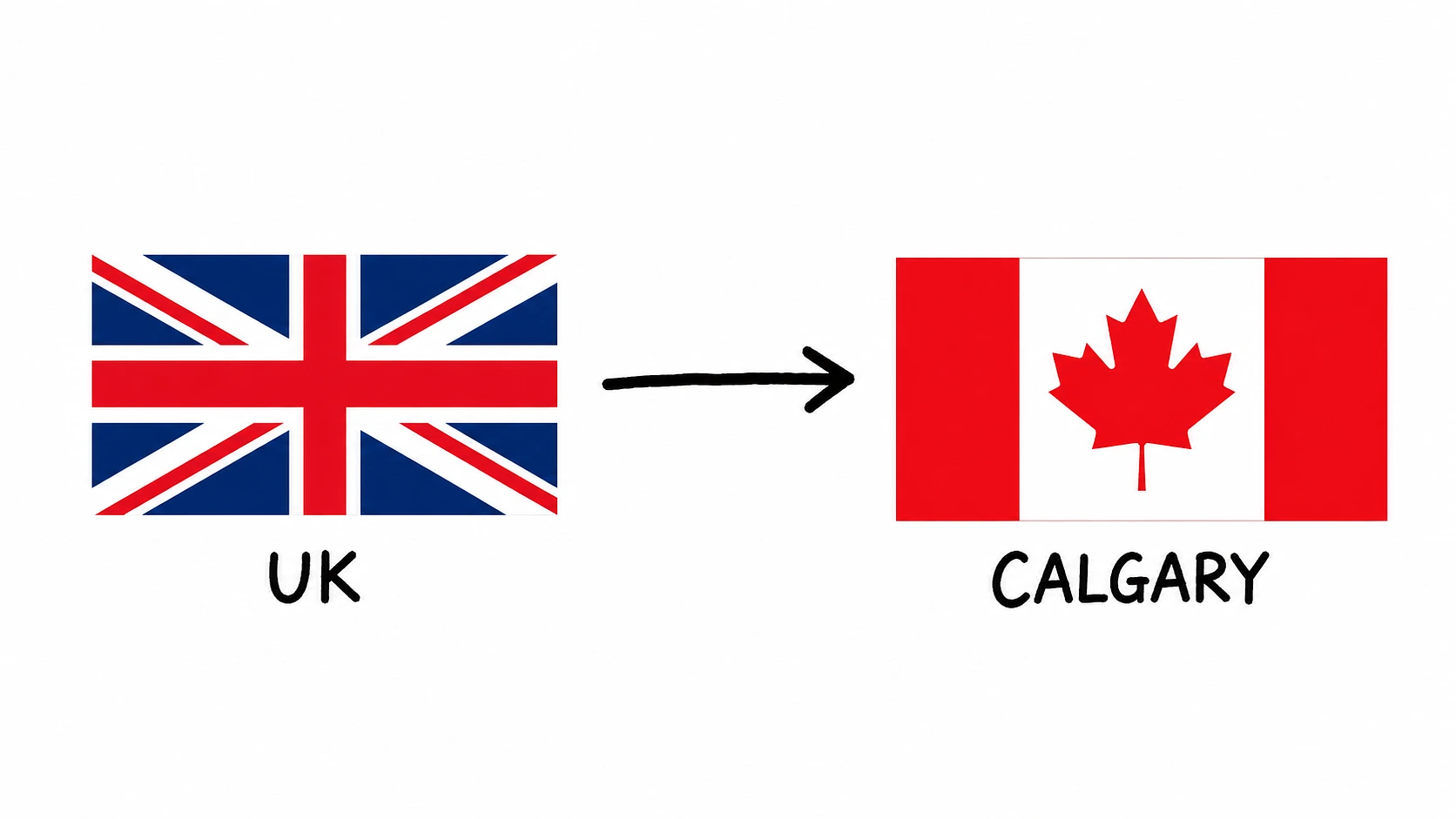
A Calgary home looks mid-priced on paper, but the sticker price hides a tax structure that leaves more in your pocket every month. If you’re weighing up a move from the UK to Alberta, the listing price is the number that misleads you most. The thing that actually shifts your monthly budget isn’t the mortgage, it’s what you stop paying on everything else once you arrive.
The headline you already know: Calgary houses aren’t dirt cheap

A typical Calgary home benchmarks at around $570,000, roughly £300,000, with detached houses closer to $748,000, about £395,000. That sits well under Vancouver or Toronto, but it isn’t the bargain it was a decade ago, and on its own it doesn’t scream “move here” to someone selling a house in the UK.
So far the conventional reading holds. Here’s where it breaks.
The bit the listing price ignores: Alberta has no provincial sales tax
You’re used to 20% VAT on almost everything. In Alberta you pay 5%, full stop. Canada charges a 5% federal GST nationwide, and most provinces stack a provincial sales tax on top of it. Alberta is the one province that doesn’t. So where a shopper in Ontario or British Columbia pays a combined rate well into double figures, an Albertan pays only the 5%.
For a Brit the contrast is sharper still, because you’re not comparing 5% against 12%, you’re comparing it against the 20% baked into your receipts back home.
Headline sales tax on a taxable purchase:
- United Kingdom: 20% VAT
- Ontario: 13% HST
- British Columbia: 12% (5% GST plus 7% PST)
- Alberta: 5% GST only
That gap turns up on every taxable thing you buy. Furnishing a house, replacing a fridge, buying a car, eating out, kids’ activities, all of it carries 7% to 8% less tax than elsewhere in Canada, and far less than you pay now.
What the tax gap actually adds up to
Skipping provincial sales tax saves an Alberta household several thousand dollars a year that a BC or Ontario household simply hands over. The provincial portion you avoid is 7% in BC and 8% in Ontario, so a family spending around $50,000 a year on taxable goods and services keeps roughly $3,500 to $4,000 (about £1,900 to £2,100) that would disappear into PST in another province.
It doesn’t stop at the till.
Lower income tax on top
Since 1 January 2025, Alberta has taxed the first $60,000 of income at 8%, down from 10%, worth up to $750 a year, around £400. That bracket replaced the previous 10% bottom rate. For a household landing on a normal salary, this stacks on top of the sales tax saving rather than replacing it. Alberta’s rates run from 8% up to 15%, and the province has the highest basic personal amount in the country, so you earn more before provincial tax even starts.
How a UK mover should actually read the numbers

Don’t compare the Calgary listing price to your UK house price. Compare your whole monthly outgoings before and after the move. The house is one line. The lines that quietly change are the 20% you stop paying on purchases, the lower income tax, and prices that already sit below Vancouver and Toronto.
For the real, current cost of groceries, utilities, transport and childcare in the province, the detailed cost of living in Alberta breakdown is the figure to plan from, because that’s where the month to month picture actually lives, not in the asking price.
Put the tax structure next to the sticker price and Calgary stops looking mid-table. It looks like a place where the same salary covers more, which is the part a listing photo will never show you.